
How Rubber Paving Handles Heavy Vehicle and Forklift Traffic
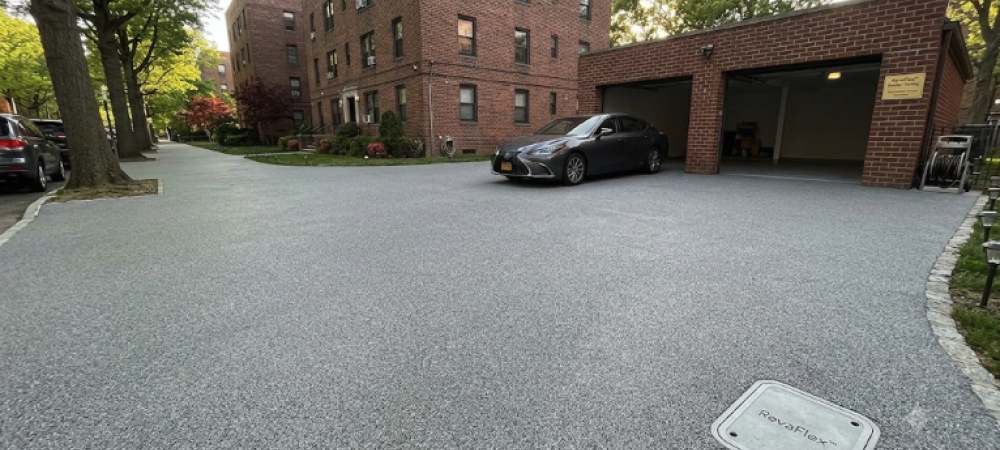
If you manage a warehouse, apartment complex, or commercial property, you already know what constant heavy traffic does to a surface. Forklifts pivot in tight spaces, delivery trucks roll through the same lanes every day, and trailers sit parked in one spot for weeks at a time. Over months and years, that kind of use takes a visible toll on standard concrete and asphalt — cracking, rutting, and surface breakdown that eventually call for a costly repave.
How It Stands Up to Heavy Loads
Traditional concrete and asphalt are rigid. That's part of why they crack — repeated point loads from forklift wheels, trailer jacks, and truck axles concentrate stress in the same spots until the surface gives out.
RevaFlex paving works differently because it flexes. The rubber composition absorbs impact and distributes weight across the surface instead of letting it concentrate in one place. That flexibility is also what allows the surface to handle temperature swings without the cracking that rigid pavement is prone to — a real advantage in a climate that sees both triple-digit summers and hard winter freezes.
The textured finish adds another layer of protection: better traction for loaded equipment moving across wet, oily, or dusty surfaces, which matters as much for safety as it does for durability.
Where This Matters Most
RevaFlex paving tends to make the biggest difference in spaces that see the heaviest, most repetitive use:
- Commercial garages and shops — constant vehicle movement and fluid exposure without the surface breaking down
- Warehouses and industrial spaces — forklift traffic and heavy pallet loads in the same paths, day after day
- Car wash bays — a surface that holds up under water exposure and vehicle weight without deteriorating
- Trailer parking areas — resists the rutting and denting that comes from trailers sitting in one place for extended periods
- Apartment complexes and HOA entryways — a durable, professional-looking surface that holds up to regular resident and visitor traffic
- Business entrances and driveways — long-term durability with a clean, finished appearance that supports curb appeal
Areas with seasonal extremes are hard on rigid pavement, which expands, contracts, and eventually cracks under the stress. RevaFlex paving's flexible composition is designed to move with those temperature changes instead of fighting them, which is a big part of why it holds up longer under heavy commercial use in this region specifically.
Maintenance and Lifespan
One of the practical advantages of RevaFlex paving is how little upkeep it needs relative to what it's asked to withstand. It resists staining and wear even under constant traffic, and because rubber surfacing can be repaired in localized sections, a worn or damaged spot doesn't mean replacing the whole surface — just addressing the specific area.
Is RevaFlex Paving Right for Your Property?
If your lot, garage, or industrial space is showing wear from daily heavy traffic, RevaFlex paving is worth a look before committing to another round of concrete or asphalt repairs. It's built to take on exactly the kind of continuous, high-load use that breaks down traditional surfacing.
Get a free estimate from Jeff's Irrigation and Landscaping, or contact our team to talk through what RevaFlex paving could look like for your property.